
Staying physically active as you get older is one of the most powerful things you can do for your body and your brain. Most people know that. The harder part is actually doing it, consistently, in a way that fits real life.
Learn four low-impact chair exercise workouts you can do at home, backed by real research, plus a look at how The Courtyard at Fitchburg, an assisted living and memory care community in Fitchburg, WI, builds on that foundation every day.
Why This Matters More Than You Might Expect
The link between daily movement and long-term health runs deeper than most people realize, particularly for adults 65 and older. A 2024 study presented at the Radiological Society of North America found that older adults with less skeletal muscle mass were approximately 60% more likely to develop dementia when adjusted for known risk factors. Researchers from Johns Hopkins University also found that lower muscle mass was associated with greater memory decline, reduced functional activity, and decreased brain volume.
“These interventions may help prevent or slow down muscle loss and subsequently reduce the risk of cognitive decline and dementia,” said Shadpour Demehri, MD, a professor of radiology at Johns Hopkins.
A separate peer-reviewed study published in the Journal of Sport and Health Science found that regular exercise prompts muscles to release signaling compounds, including one called irisin, that communicate directly with the brain. Researchers describe this as the “muscle-brain axis,” a biological pathway that may play a central role in protecting cognitive function as you age.
Building and maintaining muscle mass at 65, 70, or 80 is not just about physical strength. It may be one of the most direct investments you can make in long-term brain health.
4 Low-Impact Exercises Worth Adding to Your Senior Workout Routine
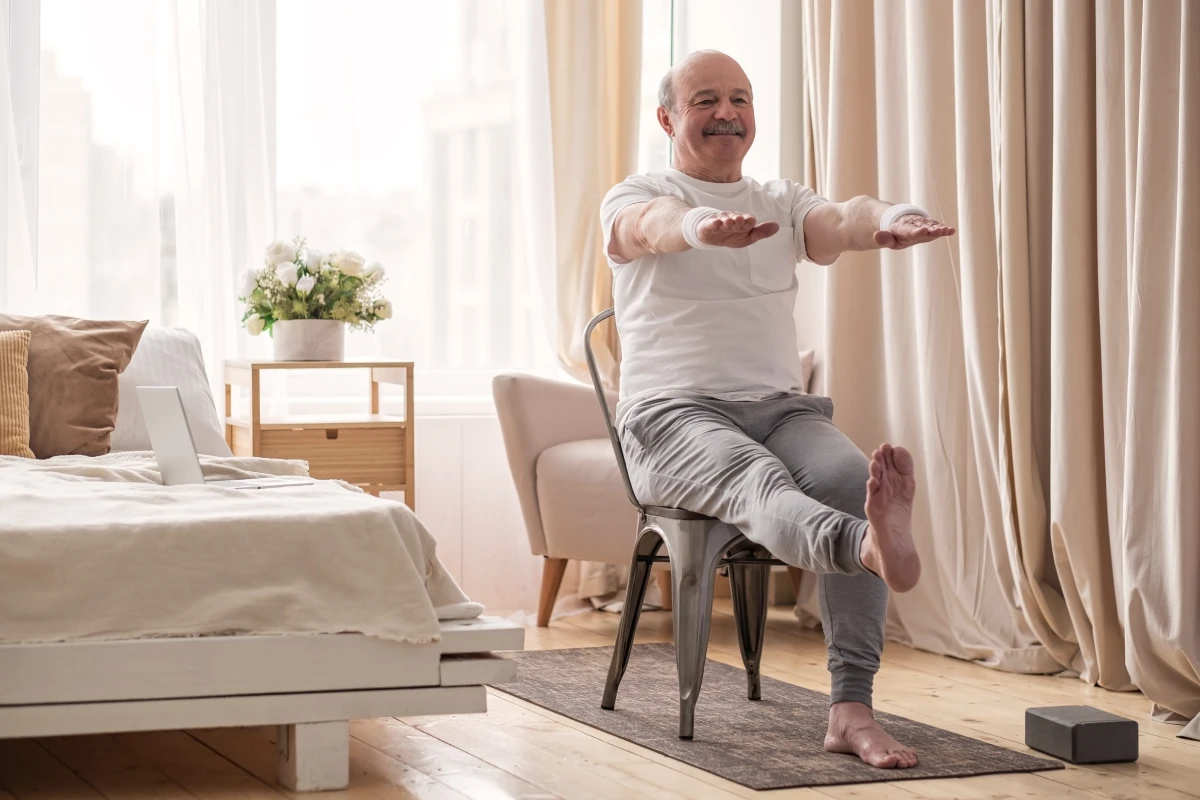
You do not need a gym membership or a personal trainer to get started. These four chair exercise workouts are accessible, low-impact, and backed by physical therapy research. They are a starting point, not a prescription.
Before beginning any new exercise program, talk with your doctor, particularly if you are managing cardiovascular conditions, osteoporosis, joint pain, or balance concerns.
This blog post should not replace medical advice. Talk with your doctor regarding any issues you may experience.
Sit-to-Stand
Getting up from a chair without using your hands is one of the clearest indicators of lower body strength and long-term independence. Physical therapists consistently rank it among the most functional daily movements older adults can train.
Seated Leg Raises
This move targets the hip flexors and quadriceps, both of which directly support walking, stair climbing, and recovering balance after an unexpected stumble. It requires nothing more than a chair and a few minutes.
Seated Resistance Band Row
Resistance band exercises for seniors are particularly effective because they build upper-body and back strength without placing a substantial load on the joints. A seated row works the muscles that support posture and reduce the physical strain of daily activities like reaching and carrying.
AARP’s free online fitness video series for seniors is a valuable resource if you are just getting started with resistance-band workouts.
Single-Leg Stand
Balance training is one of the most overlooked categories in a senior fitness routine and one of the highest-value investments in fall prevention. The single-leg stand trains the stabilizing muscles in the ankles, knees, and hips that make the difference when your footing changes unexpectedly.
Nutrition Works With Exercise, Not Apart From It
What you eat directly affects whether daily movement maintains or increases muscle mass. Protein needs increase with age. Most health guidelines for older adults recommend approximately 1.0 to 1.2 grams of protein per kilogram of body mass per day, which is noticeably higher than what younger adults typically require. Practically, that means including a protein source at each meal: eggs, Greek yogurt, lean meats, fish, beans, and cottage cheese are all accessible options.
Hydration matters too. Thirst signals often become less reliable as you get older, so your body may need water before you feel thirsty. Six to eight glasses per day is a reasonable baseline.
For families researching senior living, a community’s dining program becomes part of the health conversation. At The Courtyard at Fitchburg, residents receive three chef-prepared meals daily, made with seasonal ingredients. That kind of consistent, high-quality nutrition takes the guesswork out of meeting daily protein and hydration needs and gives residents a reliable foundation that supports everything else they do to stay active and healthy.
What It Looks Like When Fitness Is Built Into Your Day
Doing chair exercise workouts at home is a strong start. But there is a real difference between fitting exercise into a day and living somewhere it is already built in. The Courtyard at Fitchburg in Fitchburg, WI, offers assisted living and memory care with an on-site fitness center and exercise programming designed for older adults. Residents do not have to figure out which exercises work for their current level of mobility. That is already accounted for.
Group fitness classes create accountability in a way that solo at-home workouts cannot. Showing up alongside other residents who are working toward the same goals changes the dynamic entirely. Access to fitness professionals within the community means guidance, modifications, and ongoing input are available as abilities evolve over time.
Daily movement also occurs naturally through the community’s layout. Getting to the fitness center, the courtyard, the dining room, an activity, or out to the 32-acre park and walking paths adjacent to the property all add up across the day without requiring a separate plan or schedule. That is the kind of active daily life the research above points toward: not one big workout, but consistent movement woven into how you actually live.