
Retirement changes a lot of things. One of the quieter ones is how friendships get made. The built-in structure that used to create them, work, routines, and familiar faces, is suddenly gone. At The Courtyard at Fitchburg, that is exactly the kind of gap community living is designed to fill.
Why Does Making Friends Feel Different After Retirement?
For most of adulthood, social life runs on routine without anyone having to think about it.
The same coworkers, the same commute, the same faces at the same coffee machine. Familiarity builds without effort because the environment creates it automatically. Retirement removes that environment almost overnight.
Research published in the European Journal of Ageing using U.S. data found that shrinkage in social network size after retirement accounts for a significant portion of the decline in both physical health and mental well-being among older adults. That is not just a loneliness problem. It is a structural one.
The goal when it comes to making friends in retirement is not to replace what work provided, but to find a different structure that does the same job.
What Actually Helps People Make Friends in Retirement?
Making new friends during retirement usually comes down to one thing: seeing the same people regularly without having to engineer it.
That sounds simple, but it requires the right conditions. A fitness class you attend twice a week. A dining room where the same neighbors show up every morning. A card game on Thursdays that just becomes the thing you do on Thursdays.
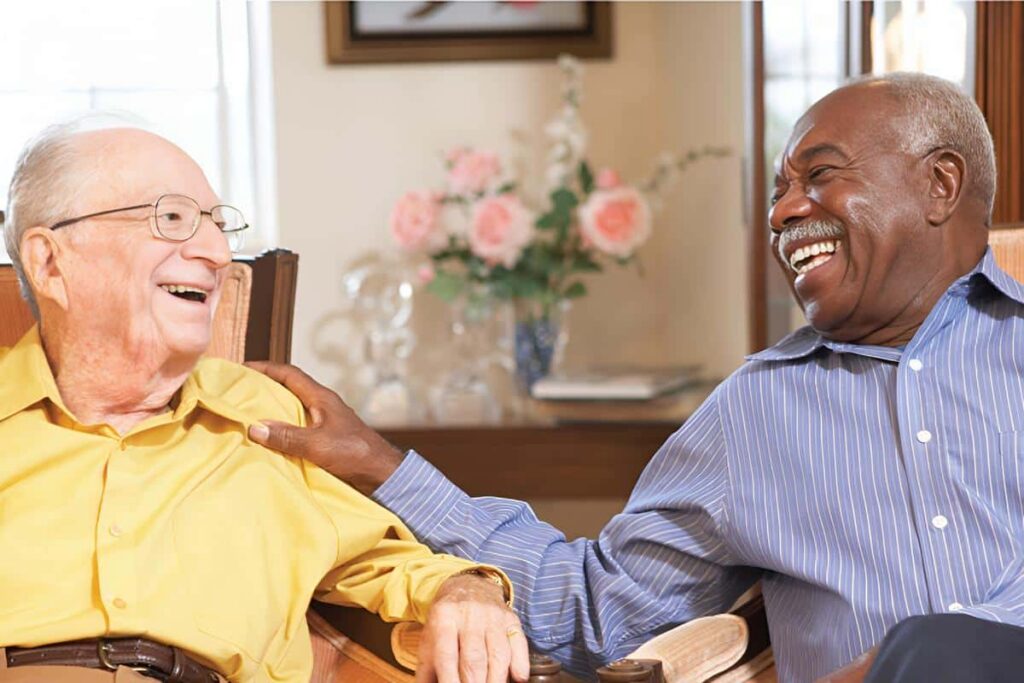
None of these moments feel significant in isolation. Over weeks, they turn a stranger into someone whose name you know, then into someone you look for when they are not there.
That is how a social life after retirement is built, not through grand gestures but through small, repeated contact in the same place.
Can You Make Friends Without a Community Setting?
Yes, and plenty of people do. Joining a local club, volunteering, and attending community events in and around Fitchburg all work for making retired friends.
The catch is that they require ongoing effort to sustain. Transportation, scheduling, and energy levels all add up over time. For some people, that is not a problem. For others, the barrier quietly grows until weeks have passed without much social contact at all.
The difference between having opportunities to stay social after retirement and living somewhere designed for connection is not small. One requires maintenance. The other just requires showing up.
How Does Community Living Support a Social Life After Retirement?
At The Courtyard at Fitchburg, social interaction is not something residents have to build from scratch or maintain through effort. It is woven into how the day is structured.
Meals happen at the same time each day. Activities are already planned. Shared spaces make it easy to cross paths with the same people regularly. Over time, those repeated interactions create familiarity, and familiarity is the raw material friendship is made of.
A morning might start with a fitness class, followed by coffee with someone who has become a familiar face over the past few weeks. Later in the day, there might be a speaker, a craft session, or an outing to the Henry Vilas Zoo, a local farmers’ market, or the UW-Madison Geology Museum. Evenings might bring a shared meal, a movie, or live music in the community room.
None of it needs to be planned. It is already there.
How Do Assisted Living and Memory Care Support Connection?
Support and social life are more connected than people expect.
In assisted living, residents have help with daily routines while keeping the freedom to choose how they spend their time. That balance matters because fatigue and the cognitive weight of managing daily tasks can quietly erode the energy people have for social engagement. When those tasks are handled, more is left for everything else.
Memory care takes a more structured approach. Activities are designed to be familiar, engaging, and suited to each person’s abilities, which helps residents stay connected and involved even as needs change. Connection is not left to chance in either setting. It is part of how each day is designed.
Why Does Intentional Design Matter More Than a Full Calendar?
It is possible to live somewhere with a packed activity schedule and still feel disconnected. A long list of events is not the same as an environment that actually draws people together.
What makes the difference is how those opportunities are designed and whether they create the conditions for repeated, low-pressure contact over time. According to Mayo Clinic, social interaction functions as genuine exercise for the brain, and the health risks of isolation are comparable to those of well-known physical risk factors. Programming built around real interests rather than filling time is what turns a calendar into something that actually works.
Frequently Asked Questions About How to Make Friends in Retirement
The most effective way is through consistent interaction, such as shared meals, activities, or classes, where you see the same people regularly.
It can be without built-in routines. Creating regular opportunities for interaction makes it easier.
Yes. It provides daily opportunities for connection, making it easier to build relationships without planning everything yourself.
Connection Doesn’t Have to Be Complicated
The friendships that form at The Courtyard at Fitchburg do not usually start with a planned activity. They start with coffee at the same table two mornings in a row. For people working out how to make friends in retirement or just trying to get their social life after retirement back on solid footing, that kind of thing happens here more than people expect.
See What Daily Life Looks Like
If you’re thinking about how to make friends in retirement and want to see how it works in real life, The Courtyard at Fitchburg can show you how connection becomes part of everyday life. Schedule a visit or contact us to learn more.